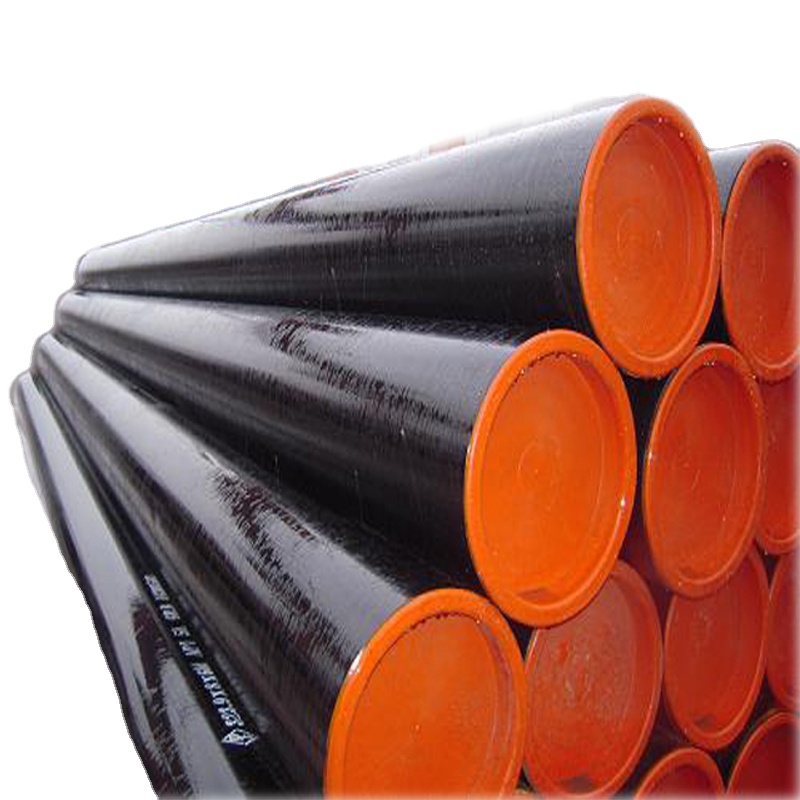
UNS 32750 Super Duplex Stainless Steel Pipes and Tubes
Lorem ipsum dolor sit amet, consectetur adipiscing elit, sed do eiusmod tempor incididunt ut
UNS 32750 Super Duplex Stainless Steel Pipes and Tubes
Lorem ipsum dolor sit amet, consectetur adipiscing elit, sed do eiusmod tempor incididunt ut
UNS 32750 Super Duplex Stainless Steel Pipes and Tubes
Super Duplex Stainless Steel is a highly alloyed, good performance Duplex steel with a pitting resistance. Super Duplex offers good resistance to pitting and crevice corrosion. Super Duplex is suited for use in aggressive environments. Super Duplex Stainless has good resistance to stress corrosion cracking in chloride and sour environments. Super Duplex has good resistance to erosion corrosion and corrosion fatigue.
Benefits of UNS32750
Applications
Standards
Benifits of UNS32750
Stainless Steel Seamless Pipes SS Seamless Pipes, Stainless Steel Pipes, SS Pipes, Stainless Steel Cold Drawn Pipes, ASTM A 312 Stainless Steel Seamless Pipes, Stainless Steel 304 Seamless Pipes, SS Seamless Pipes Suppliers in Mumbai, Seamless Stainless Steel Pipes Stockholder in Pune Stainless Steel Pipes , Supplier in Hyderabad, SS Cold Drawn Pipes, ASME SS Pipes, Stainless Steel Pipes, SS Seamless Pipes. Stainless Steel Seamless Pipes, Stainless Steel Seamless Pipes, Stainless Steel 304L Seamless Pipes, Stainless Steel Seamless Pipes Stockist in India, Stainless Steel Seamless Pipe Price in Thane, ASTM A312 Stainless Steel Seamless Pipes in Bengaluru, Gujarat, Kolkata, Delhi.
- Improved corrosion resistance in comparison to Duplex
- Greater tensile and yield strength
- Good ductility and toughness
- Good stress corrosion cracking resistance (SSC)
- Opportunity for purchases to reduce their material costs without compromising on quality
Applications
- Oil & Gas Industries
- Chemical Industries
- Automotive Industries
- Fertilizer Industries
- Petrochemical Industries
- Injection and ballast water systems
- Mechanical and Structural Industries
- Refinery Industries
Standards
ASTM/ASME ………. A240 – UNS S32750
EURONORM………… 1.4410 – X2 Cr Ni MoN 25.7.4
AFNOR……………….. Z3 CN 25.06 Az
Corrosion Resistance
- General Corrosion
The high chromium and molybdenum content of 2507 makes it extremely resistant to uniform corrosion by organic acids like formic and acetic acid. 2507 also provides excellent resistance to inorganic acids, especially those containing chlorides.
In dilute sulfuric acid contaminated with chloride ions, 2507 has better corrosion resistance than 904L, which is a highly alloyed austenitic steel grade specially designed to resist pure sulfuric acid. - Crevice Corrosion
The presence of crevices, almost unavoidable in practical constructions and operations, makes stainless steels more susceptable to corrosion in chloride enviroments. 2507 is highly resistant to crevice corrosion. The critical crevice corrosion temperatures of 2507 and several other high-performance stainless steels are shown above. - Intergranural Corrosion
2507’s low carbon content greatly lowers the risk of carbide precipitation at the grain boundaries during heat treatment; therefore, the alloy is highly resistant to carbide-related intergranular corrosion. - Pitting Corrosion
Different testing methods can be used to establish the pitting resistance of steels in chloride-containing solutions. The data above were measured by an electrochemical technique based on ASTM G 61. The critical pitting temperatures (CPT) of several high-performance steels in a 1M sodium chloride solution were determined. The results illustrate the excellent resistance of 2507 to pitting corrosion. The normal data spread for each grade is indicated by the dark gray portion of the bar.
Mechanical Properties
2507 combines high tensile and impact strength with a low coefficient of thermal expansion and high thermal conductivity. These properties are suitable for many structural and mechanical components. The low, ambient, and elevated temperature mechanical properties of 2507 sheet and plate are shown below. All of the test data shown are for samples in the annealed and quenched condition.
Ultimate Tensile Strength, ksi116 min.0.2% Offset Yield Strength 0.2%, ksi80 min.0.1% Offset Yield Strength 0.2%, ksi91 min.Elongation in 2 inches, %15 min.Hardness Rockwell C32 max.Impact Energy, ft.-lbs.74 min.
| Ultimate Tensile Strength, ksi | 116 min. |
| 0.2% Offset Yield Strength 0.2%, ksi | 80 min. |
| 0.1% Offset Yield Strength 0.2%, ksi | 91 min. |
| Elongation in 2 inches, % | 15 min. |
| Hardness Rockwell C | 32 max. |
| Impact Energy, ft.-lbs. | 74 min. |
Processing
- Hot forming
2507 should be hot worked between 18750F and 22500F. This should be followed by a solution anneal at 19250F minimum and a rapid air or water quench. - Cold Forming
Most of the common stainless steel forming methods can be used for cold working 2507. The alloy has a higher yield strength and lower ductility than the austenitic steels so fabricators may find that higher forming forces, increased radius of bending, and increased allowance for spring back are necessary. Deep drawing, stretch forming, and similar processes are more difficult to perform on 2507 than on an austenitic stainless steel. - Heat Treatment
2507 should be solution annealed and quenched after either hot or cold forming. Solution annealing should be done at a minimum of 19250F. Annealing should be followed immediately by a rapid air or water quench. To obtain maximum corrosion resistance, heat treated products should be pickled and rinsed.
Welding
2507 possesses good weldability and can be joined to itself or other materials by shielded metal arc welding (SMAW), gas tungsten arc welding (GTAW), plasma arc welding (PAW), flux cored wire (FCW), or submerged arc welding (SAW). 2507/P100 filler metal is suggested when welding 2507 because it will produce the appropriate duplex weld structure.
Preheating of 2507 is not necessary except to prevent condensation on cold metal. The interpass weld temperature should not exceed 3000F or the weld integrity can be adversely affected. The root should be shielded with argon or 90% N2/10% H2 purging gas for maximum corrosion resistance. The latter provides better corrosion resistance.

General Contract
Lorem ipsum dolor sit amet, consectetur elit. Ut elit tellus, luctus nec ullamcorper mattis

Project Planning
Lorem ipsum dolor sit amet, consectetur adipiscing elit. Ut elit tellus, luctus nec mattis

Interior Design
Lorem ipsum dolor sit amet, consectetur adipiscing elit. Ut elit tellus, luctus nec mattis
Some Great Features
Lorem ipsum dolor sit amet, consectetur adipiscing elit, sed do eiusmod tempor incididunt ut

Intustry Tested
Tested Through-out all Safety Standards

Tough
Resisting fracturing when force is applied to it
Contact Us
Our Recent Projects
Lorem ipsum dolor sit amet, consectetur adipiscing elit, sed do eiusmod tempor incididunt ut
Satisfied Clients
Complete Orders
Our Experiences
Products
Our Other Products
ASTM A672
ASTM A691 EFW PIpes
SPIRAL WELDED PIPE
HOLLOW SECTION PIPE & TUBES
SOUR SERVICE LINE PIPE
Clients Words